The Business Plan

One of the first things budding business owners are encouraged to do is write a business plan. There is good sound reasons behind it and we’ll give you a great reason why. To do this we’ll use photographers. So, for example, you’re a guy and you see a lot of hot females and a good way to get next to them is to get them excited about modeling. But how are you going to do that? You do an internet search and see a lot of guys taking photos of really hot females, even skimpy bikini clad ones! So you invest in a camera and a couple of lenses. But now you need to figure out how to use it. You search again and look to YouTube as well as some photographer Facebook groups. You start getting pointer and you put what you are learning to use. A few months to a year, you’re pretty decent at taking photos of buildings, animals, plants, and your friends. Now you make some posts to get some hot models to shoot with you.

But here is where things go a muck and quick! While you are learning photography and how to use your camera, you are consistently conditioned by reading, seeing and hearing other photographers saying they are “artists”, professionals and charge what you are worth! Plus, you quickly learn some serious bad habits from the start such as never let anyone see your unedited images, never give raw files, plaster and ruin your photos with a watermark across the image, no pay-no images! You also learn how to exploit models for personal gain and profit with TF (Trade For Time or Trade For Prints) because you think you have an understanding of Copyright law and because you pushed the shutter button, you own the images! You then turn around and learn to use some photo editing software to edit images. You give the model maybe five (5) to twenty-five (25) edited images in a compressed jpeg quality and bam, you are now a professional photographer! Congrats!

But wait, you are NOT making any money. You did what the masses are doing and for the most part either become a Guy With Camera (GWC), as we call it, a Perv-tographer, whose goal is to merely use photography to get female models naked, sexually harass or assault them. Or you have become a “professional hobbyist” per IRS tax rules as you haven’t made a profit in the two of fives years. That’s only part of it! You could be breaking consumer protection laws and if you get sued for any reason above or for something like not providing the model or client images after they paid, you… you could be in real trouble if you haven’t set up a legitimate business or pay the proper taxes!

On the other hand, you are serious about starting a photography business, or any business for that matter. You want a plan, a road map of how you are going to go from a thought or idea to actaully making your business idea a reality. Plus, with careful planning and analysis, you know how to become successful!

Two Types of Business Plans

  1. The Traditional Plan – This type of plan is very detailed, takes more time to write, and is comprehensive. Lenders and investors commonly request this plan. You might prefer a traditional business plan format if you’re very detail oriented, want a comprehensive plan, or plan to request financing from traditional sources. When you write your business plan, you don’t have to stick to an exact business plan outline. Instead, use the sections that make the most sense for your business and your needs. Traditional business plans use some combination of these nine sections.

  2. The Lean Startup Format – You might prefer a lean startup format if you want to explain or start your business quickly, your business is relatively simple, or you plan to regularly change and refine your business plan. Lean startup formats are charts that use only a handful of elements to describe your company’s value proposition, infrastructure, customers, and finances. They’re useful for visualizing tradeoffs and fundamental facts about your company. There are many versions of lean startup templates, but one of the oldest and most well known is the Business Model Canvas, developed by Alex Osterwalder. You can search the web to find free templates of the Business Model Canvas, or other versions, to build your business plan.

For this article, we’ll focus on the Traditional Plan format.

Executive summary

Briefly tell your reader what your company is and why it will be successful. Include your mission statement, your product or service, and basic information about your company’s leadership team, employees, and location. You should also include financial information and high-level growth plans if you plan to ask for financing.

1. What is the name of your business and what do you offer? In a few sentences give the name of your business, where you are located and describe what you’re selling. Is it a product or a service? Is it tangible or digital? Why will your business be successful?

2. What is your company’s Vision, Values and Mission? A mission statement is a short statement of why an organization exists, what its overall goal is, identifying the goal of its operations: what kind of product or service it provides, its primary customers or market, and its geographical region of operation.

3. Who is your company’s executives and employees? Here you will want to identify each person who is starting with the business and their role(s). It maybe just you and you are going to start off as a sole proprietor wear many hats. That’s fine, but put it on paper! Maybe in a couple of years your plan is to hire an assistant or college intern. What will they do? How much will they be paid?

4. Overview of Financials – Here you might want to do an Microsoft Word or Excel spreadsheet where you identify all of your expenses. Don’t worry if you miss some, but put some though into what expenses you might incur and what is the cost of that? It might be a one time expense, or something hourly (like a studios rental) month (like a website, utilities, memberships, etc.) You also want to list what each person will make and will it be salary? Hourly? As a sub-contractor? A simple way to do this is take the average pay for a photographer (you can Google this). Let’s say it is $34,000 annually. How do you break that down into an hourly cost? For most, there are 5 working days in a week. You hour 8 hours a day to get 40 hours a week. There are 52 weeks in a year, so that comes to 2080 hours a year (not excluding holidays, etc.). So, divide what you want to make, $34,000 by 2080 and you $16.34 an hour. Decide what each person will make and list that information.

Company Description

Use your company description to provide more detailed information about your company. Go into detail about the problems your business solves. Be specific, and list out the consumers, organization, or businesses your company plans to serve.

Explain the competitive advantages that will make your business a success. Are there experts on your team? Have you found the perfect location for your store? Your company description is the place to boast about your strengths. This is where you also will start to discover and explain your SWOT analysis.

1. What is your SWOT analysis? SWOT stands for Strengths, Weaknesses, Opportunities, and Threats.

2. Who is your competition and what is special or different about what you offer? Competition is good because it means money is being made in the business you want to start. However, in order to compete, you need to know who else is engaged in offering the same or similar types of products or services. You will want to list what sets your apart from your competition. How will your product or service be different? Will you deliver it faster or cheaper? Will you offer more personal service or allow self-service? Maybe you will give raw files because most photogs don’t. Maybe you will do joint copyright ownership with TF photo shoots, again, because most want exclusive rights to their images. If you want to be greedy and selfish in this manner with copyrights, list it and why.

3. Who are the people you will serve and how will your product or service help them? Answering this will help you craft effective marketing messages. Many businesses focus on what they offer (#1 product or service) in their marketing. But what consumers really want is to know how your product or service will help them. You can list your offer and what’s special about it (#1 product or service and #2 product or service ), which are your features. But then you want to correlate a benefit for each feature. Define what your feature means to the consumer. Fast delivery is a feature—fast delivery so you can start using it right now is a benefit.

4. Who will benefit from what you offer? People buy stuff to solve a problem. If they have a flat tire, they need a tire repair shop. If they’re bored, they want to be entertained. If they’re sick, they want health solutions. Based on what’s special about your business, how will what you offer benefit people? For example, if you offer portraits, what people are most likely to want and need that? Maybe business executives & employees, high school seniors, families?

Market Analysis

You’ll need a good understanding of your industry outlook and target market. Competitive research will show you what other businesses are doing and what their strengths are. In your market research, look for trends and themes. What do successful competitors do? Why does it work? Can you do it better? Now’s the time to answer these questions.

1. Who is your ideal customer? This is called your Target Market. You’ve already started to define this in Company Description when you determined who’d best benefit from what you offer. Now it’s time to learn about them in detail. What is their gender, financial status, interests and their other demographics? Where do they live, work, go for entertainment, buy food, etc.? How much money do they make?

2. How are these customers or clients being served now? Again, who is the competition? If you have a lot, you can narrow it down to say the top 20 in a 25 mile radius or similar. What methods are your competition using? Why is it working or not working?

3. Where can your ideal customer be found? If you are planning on shooting weddings, where is the best places to find wedding clients? Note – One mistake far too many photographers make is spending too much time in model/photographer groups or social media sites. It is fine to post some images here and there, but other photographers and models are NOT your target market! I see tons of photographers post very elaborate marketing materials for say portraits in model and photographer groups and they are doing the same thing you are… looking for paid work! Define who is your paying customers or clients and where they can be found.

4. How can you entice your ideal customer? You’ve started this as well when you translated your products, services and features into benefits. Now it’s time to craft marketing materials that speak your target market’s language. Putting a message that speaks directly to your market where your market hangs out is the best way to get clients and customers. Know exactly who your target market is and being where they go when they have a problem or issue to solve and knowing what they need and how provide a solution is what you want to know as well as do.

Marketing and Sales

Marketing & Sales

There’s no single way to approach a marketing strategy. Your strategy should evolve and change to fit your unique needs. Your goal in this section is to describe how you’ll attract and retain customers. You’ll also describe how a sale will actually happen. You’ll refer to this section later when you make financial projections, so make sure to thoroughly describe your complete marketing and sales strategies.

1. How much will you charge for your product or service? If you’re selling one widget, you might have one price. But many products and services can have multiple pricing structures. For example, if you’re starting a wedding photography business, you can have one price for hourly clients, or a flat fee. You can also have different pricing structures for engagements, actually wedding and various pricing for more or less packages. While is it good to know what the competition is charging, you don’t want to base your prices off of what they are charging and be fairly close. Each business is different and has different costs or expenses. For example, you may be using Preachtree accounting software and I may be using QuickBooks Pro and John Doe is using outside accountant and Jane Doe has a few people in house doing the accounting Be very careful and know your own costs! If not you could end up costing yourself a lot of sales or money because the top five competitors are say shooting weddings for $1500 and you have more invested in your gear, higher studio rent/lease payments, drive a fancier vehicle, live in a more upscale area, etc. Know Your Costs and break them down into an hourly cost to help you figure what your pricing structure should be!

2. How will you be paid? Getting paid is an important part of every business equation. The easier you make it for customers and/or clients to pay and get what they want, the more likely they will do business with you. Will you accept a variety of payment options such as check, cash and credit card? Will you accept PayPal? Will you accept payments? What are your payment terms?

3. When will you be paid? If you’re selling a product, you’ll be paid at the time of the sale, but if you’re selling a service, you might not get paid until the service is completed. Or you can charge half the cost upfront and bill the remaining when the service is provided. Decide if you’ll bill monthly, bi-weekly or weekly, and when you expect payment. For example, will clients have 7 to 10 days to pay, or will payment be due on receipt?

***WARNING*** You will want to check with your local city and state for business and consumer regulations. For example, in Ohio, you are required to follow: Ohio Administrative Code 109:4-3-05 (D)(12) Repairs or Services “Fail to provide the consumer with a written itemized list of repairs performed or services rendered, including a list of parts or materials and a statement of whether they are used, remanufactured, or rebuilt, if not new, and the cost thereof to the consumer, the amount charged for labor, and the identity of the individual performing the repair or service;” 

That brings us to things like Deposits… Ohio Administrative Code 109:4-3-07 DepositsIt shall be a deceptive act or practice in connection with a consumer transaction for a supplier to accept a deposit unless the following conditions are met: A through E of this section. This means you need to have and provide the client or customer with a deposit policy as well as a refund policy.

And, here is where you need to be extremely careful! Ohio Revised Code 1345.03 Unconscionable consumer sales acts or practices, including but not limited to, (A)(B)(2)(5) Whether the supplier required the consumer to enter into a consumer transaction on terms the supplier knew were substantially one-sided in favor of the supplier; (6) Whether the supplier knowingly made a misleading statement of opinion on which the consumer was likely to rely to the consumer’s detriment;

For photographers here is where you need to be careful and we’ll give you and example. Most photogs have been taught or conditioned to think they are “artists” and that make them worth more. You shoot a wedding and charge the wedding couple $6500.00. At the wedding, you take 2000 images. This is pretty much the standard, however, you do not let the couple see any unedited images. You then narrow it down to 250 images and the couple can pick 50 for their wedding album. You edit the image your way rather than check and show them what could be done, what should be edited and what shouldn’t based on your experience. You then provide them 50 compressed lower high resolution JPEGS rather than say TIFF, RAW, PNG which have less compression. You also then plaster your watermark (what we call advertising marks) on the photos. Lastly per your contract you retain all the rights to the images and place restrictions on them such as not selling their photos to the National Enquirer, not being able to post the reception photos on Instagram, but they can on Twitter. However they can post both wedding and reception photos on Facebook providing they make 10 posts day about your photography, except on Thursdays. Sound crazy? You’re right it is! But this is exactly what most photogs do. If you want to buy the rights and do whatever with the images, aside from the $6500 you already paid, you can buy the rights for an additional $5000 because the bride is a well-known notorious blogger.

Or you take the remaining photos including the outtakes that are not that bad, sell some to stock photo companies for further compensation, others you submit to wedding photo contests for further prizes and recognition and others you use for show and tell on your website and social media site to advertise for self gain and profit on the next wedding.

Based on the above did you the photographer required the client(s) to enter into a consumer transaction on terms the you the photographer knew were substantially one-sided in favor of you, the photographer? That is substantially one-sided in favor of the wedding photographer! You may argue and yes, you are would be correct under U.S. Copyright law for photos, once you push the shutter button making the image a “fixed format” you own the rights. However, you bent the clients over the barrel with unfair restrictions and charged them $6500 simply because you could. That is an illegal one-side contract and business transaction that is illegal in Ohio as well as many other states with the uniform code. So, Be Careful with What You Charge, How You Charge and What The Client/Customer Is Getting In Return. It needs to be fair! You are not going to see a window company charge customer for the window and installation and they have restrictions say they can’t open the window in the summer, or in 3 months remove them, sell them and go with a different window manufacturer!

Organization and Management

Tell your reader how your company will be structured and who will run it. Describe the legal structure of your business. State whether you have or intend to incorporate your business as a C or an S corporation, form a general or limited partnership, or if you’re a sole proprietor or LLC. Use an organizational chart to lay out who’s in charge of what in your company. Show how each person’s unique experience will contribute to the success of your venture. Consider including resumes and core values of key members of your team

1. What is your legal structure? Are you a sole proprietor, a general or limited partnership, a limited liability company (LLC), or a C or an S corporation? The business structure you choose influences everything from day-to-day operations, to taxes, to how much of your personal assets are at risk. You should choose a business structure that gives you the right balance of legal protections and benefits.

2. Who’s in charge of what in your company? You already gave the general information above under Executive Summary. Now show in more detail how each person’s unique experience will contribute to the success of your venture. What is their background or experience level(s). Do they have formal education, degrees or certifications that will aid the business?

Service or Product Line

Describe what you sell or what service you offer. Explain how it benefits your customers and what the product life cycle looks like. Share your plans for intellectual property, like copyright or patent filings. If you’re doing research and development for your service or product, explain it in detail.

1. What exactly are you selling? If you are a photographer, you are a service provider as well as product provider of images you take. Therefore, you will want to describe both in detail.

2. What benefits are clients/customers getting from using your products or services? As a photographer, don’t just say better quality images. Most people in the U.S. have cell phones with cameras and it doesn’t cost them anything to take as many images as they want and instantly post them on the internet. So, maybe its shooting at a rare or exotic place? Maybe tourist are coming to your area and for a small fee provide them a tour and images of their experiences?

3. Do you have intellectual property and how will you deal with it? These are things such as copyrights, patents, trademarks or products in development, of KFC’s 21 secret herbs and spices. For photographers, you will have copyrights to the images “you” take. But if you are working with say a model on a Trade For shoot, will you do shared copyright ownership or retain the full exclusive rights yourself? If you are shooting for a company who you are shooting their intellectual property such as ours, they may have restrictions and if you are not willing to agree to their terms, it may prevent you from securing work with them. Are you willing to do that? If yes or no, include why.

4. What is the life cycle of your products and/or services? This may sound simple in some businesses and difficult in others. You may think digital images may not have a life cycle, but as technology changes how does that affect your images? In the film days images could be reproduced with negatives. Then it floppy discs, to CD-roms to external hard-drives and now USB thumb drives and cloud storage. Also, consider things like photo editing software or say accounting software. Further, do your clients use you one time? Or is your products or services set up in a way that clients will come back for more? Perhaps you are selling a consumable product that every month customers may need to reorder. List in detail the pros & cons of each product and service and if there are life cycles and how you deal with them.

Financial Projections & Funding Requests

How Much Do I Need For… ?

Your goal is to convince the reader that your business is stable and will be a financial success. Ideally, you want to provide a prospective financial outlook for the next 1, 3 and 5 years. Include foretasted income statements, balance sheets, cash flow statements, and capital expenditure budgets. For the first year, be even more specific and use quarterly — or even monthly — projections. Make sure to clearly explain your projections, and match them to your projections and/or funding requests. This is a great place to use graphs and charts to tell the financial story of your business.  

Existing Business – If your business is already established, include income statements, balance sheets, and cash flow statements for the last three to five years. If you have other collateral you could put against a loan, make sure to list it now.

Funding Request(s) – If you’re asking for funding, this is where you’ll outline your funding requirements. Your goal is to clearly explain how much funding you’ll need over the next five years and what you’ll use it for. Specify whether you want debt or equity, the terms you’d like applied, and the length of time your request will cover. Give a detailed description of how you’ll use your funds. Specify if you need funds to buy equipment or materials, pay salaries, or cover specific bills until revenue increases. Always include a description of your future strategic financial plans, like paying off debt or selling your business.

1. What are your assets to get started?  What do you currently have or can used to get started? This could be money, but it can also include your computer, other equipment and tools you have to help you get started. You don’t need or have to have everything right now. For example, years ago I started a very successful excavating and construction company with what carpentry tools I had, some hand tools like shovels, rakes, etc., my pickup truck and $50.00. This was back in the 1990’s before the internet was what it is today. The fifty dollars went towards two magnetic signs for my truck, a ream of colored printer paper and 500 free business cards I got from some printing company. In five years, I had 16 employees and doing projects that were around $2 million dollars. All heavy equipment was rented or leased start with. Once we got to a point where we utilizing something most of a week, we then purchased it. Even in photography, you can or could start with your cell phone or a cheap entry level kit camera system. There are places where you can rent cameras, lenses, lighting, stands etc. This goes for about any business.

So list what you have and if you need to rent or lease something be sure to include that in your financials. But also show where you are going to buy it.

2. How much do you need to get started and where are you going to get it? Many businesses can be started with little to no money, depending on the business. Start by making a list of projected expenses for startup and ongoing expenses, such as monthly internet, editing software, utilities (take your existing monthly utility bills for each service, and use 25% of each monthly utility if you are starting in your home or apartment. This is a rule rule per IRS tax codes, but list the last 12 months. This will help you figure future projections and budgets.), insurance, gas for vehicle(s), studio or office rental space, etc. Put some thought into it and be honest and realistic. The more detailed you are, the better prepared you’ll be as well as better chances of being successful. 

If you need money to get started, where are you going to get it and how will you pay it back, if necessary? Do you have savings you could use? Do you have a credit card you can use?

3. How much do you want to make?  In the road map analogy, this is the destination. You want to figure both your wages as well as annual sales for your business.When you come up with your number, be sure to include overhead and costs related to running your business along with your profit goal. This may seem difficult, but it is really fairly easy! Start with, what do you make at your normal job? Let’s say you make $40,000 a year. You currently are living off of that amount so, again, list those expenses. But an easy way to break this down is… most jobs, you are going to work 8 hrs a day, 5 days a week to get a 40 hour work week. There are 52 weeks a year, so 40 x 52 = 2080 working hours including holidays. Now take $40,000 / 2080 = $19.23 an hour. Is that about right what you actually make? That doesn’t sound like a lot and working for yourself, you want to make more. So let’s double that as you want to be able to grow your business, pay payroll taxes, insurance, retirement, etc. $80,000 / 2080 = $38.46 an hour. This is what you will charge for yourself. Now add your overhead which is all of your expenses. A good way to do this is to create a spreadsheet and list each expenditure. Let’s assume you are renting an apartment for $900 a month, x 12 = $10,800 a year. You can deduct (write off) 25% as a business expense as you live in the unit and is not fully part of the business. 25% of $10,800 = $2700. What does your home office cost you an an hour? $2700 / 2080 = $1.30.

Do this for each expense and then add them up. Example: $38.46 + $1.30 = $39.76. This will give you your overhead… the cost of doing business. Let’s assume you did that and you came up with $125.00 an hour. Now you need to add your profit and let’s say you want to make 25%. Take $125.00 x 25% = $31.25. You now add that to your overhead. $125.00 + $31.25 = $156.25. This is what you would charge a client for your services. For example, you are figuring shooting portraits in 4 hour blocks $156.25 x 4 = $625.00. Doing this can help you establish realistic pricing.

Don’t make the mistake of looking at the competition and what they charge and just come up with something close. Know your costs!

4. What do you need to do to reach your financial goal? Using the price(s) you came up with above, determine how many sales or billable hours you need to meet your goal. If you want to gross $200,000 a year and charge $156.25 per hour for your service, you need to sell 1,280 hours of service per year. That equates to 25.6 hours a week (with a two-week vacation) or 5.12 hours day (with weekends off). Note, that while you might bill for 5 hours day, you’ll likely work more because of administrative and marketing tasks you need to do daily as well.

Calculation: $156.25 (hourly rate) x 5.12 (hrs. per day) = $800 x 5 (days a week) $4000 x 50 (weeks) = $200,000 (per year).

But if you have a product; let’s say you are a wedding cake baker. You figure all the costs to make a 3 tier cake and that is $30.00. Using the hourly rate in #3 of $38.46, it takes you 8 hours start to finish to mix, bake, frost, decorate and box the cakes… $38.46 x 8 = $307.68 + $30.00 (cake mix, frosting, box, etc.) = $337.68 is what you charge your customer. Assuming you want to make $200,000 a year, / $337.68 = 592 cakes you would have to make and sell a year. Sounds like a lot, but that is 12 cakes a week and 3 cakes a day. Can you make 3 cakes a day? Is your business doable and realistic? Can you reach your financial goals? In the above example, could you mix enough cake batter to make 3 cakes at a time to bake, frost, decorate in 8 hrs? You do a Google search to research what the average 3 tier wedding cake costs and discover, “On average, a wedding cake costs between $350 and $450 nationwide. Several factors affect the average cost of a wedding cake including the size of the cake, the ingredients, the number of tiers, the delivery location, and any special flavors or decorations.” (April 2019). Is your figures within that average? Yes! This means you have a realistic and doable business, providing you are able to get the sales.

 Once you’ve done this action step, you’ll know exactly how much you need to sell to meet your goal(s).

Appendix

Use your appendix to provide supporting documents or other materials were specially requested. Common items to include are credit histories, resumes, product pictures, letters of reference, licenses, permits, or patents, legal documents, permits, and other contracts.

Overcoming Obstacles

1. What’s stopping you? What challenges or obstacles do you have now that are making it difficult to start or run your business? This will vary from person to person. Common obstacles are a lack of knowledge, no time, no help and not enough resources.

2. How can you overcome what’s stopping you? Many would-be business owners don’t do this step. They use the obstacle as an excuse to give up on the dream of owning and operating a successful business. But obstacles are just annoyances that, if dealt with, can be overcome! Doing this requires you taking the time to analyze the situation and brainstorm solutions. How can you learn more? (Read, attend conferences, etc.) How can you get more time? (Ask for help.) How can I get more resources? (Have a yard sale or sell unwanted or unneeded stuff on eBay make extra money)

Each of these questions requires just a few words or sentences, and will help you focus and build a foundation for a successful business. It will help you define what you’ve got and who you’ve got it for, the numbers you need to achieve to reach your financial goal, and areas you need to deal with or overcome.

Additional Resources

Starting a business can seem overwhelming and especially if you lack experience. But the good news is that there are a ton of resources out there and available for you. While this site is geared more towards photography and modeling, the same things apply to any business. For photographers there are a ton of photography groups on social media sites. But with any business, there are Meet Up groups, seminars, websites, YouTube channels and that is what most think of.

But, don’t forget, the Small Business Administration (SBA) has some great tips as well as samples of different business plans to get you started. You can also check out the SBA’s website for other helpful information like funding resources and where to get assistance in your local area if you need help. Additionally, there is the Senior Core Of Retired Executives (SCORE) that mentors business owners as well as Small Business Development Centers (SBDC), the Veteran’s Business Outreach Centers (VBOC) and the Women’s Business Center (WBC), which are also part of the SBA. There is also your local Chamber of Commerce, which you can Google to find your nearest local office or branch. You can also check locally or on a state level to see if you have any Workforce Development Centers, which some offer free or low-cost training is various areas. A lot of these agencies and programs are setup and funded with your tax dollars. So, don’t be afraid to ask for help!

Lastly, as you build your business, refer to your business plan for reminders or guidance, and tweak it as needed to help you reach your goals and success!

History of Modeling

When most people think of modeling, they think of Victory Secret fashion shows with modeling walking the runway, glamorous photo shoots in exotic locations, flashy, apparel, limos, fame, etc. But it wasn’t always like that. So, how did modeling come into existence and become a very sought after profession? To answer this, we need to travel back in time.

What Is A Model?

By most common definitions, a model is a person with a role to display, advertise, promote commercial products (most notably fashionable clothing in fashion shows), or to serve as a visual aid for people who are creating works of art for artists, or to pose for photography shoots.

What Does Fashion Have To With It?

Without fashion, we wouldn’t have modeling. While there a far more to fashion than we’ll focus on here, fashion design and production is from prominence in France from the 15th century. In the 16th century, Anne Boleyn was famous for wearing a French-style hood, which showed her hair and had a generally provocative style. Even then, the French were famous for their liberal attitude towards sexuality. From the 17th century, it exploded into a rich industry both for local consumption and for export. Haute Couture began in the 18th century, but the French had been looked to with admiration or disdain in their dress sense well before that. Also in the 18th century, couturier Rose Bertin was named the Minister for fashion and the position was still retained in the Napoleonic era. Initially, it was the rich and powerful telling the designers what they wanted to wear in clothes. During the 19th century, fashion transitioned into many styles. The modern term of haute couture originated in the 1860’s, for “fashion in good taste“.

Artist vs Photographer

In the 19th century, everything began to change. It was during this period that many design houses began to hire artists to sketch or paint designs for garments. The images were shown to clients, which was much cheaper than producing an actual sample garment in the workroom. If the client liked their design, they ordered it and the resulting garment made money for the house. Thus, the tradition of designers sketching out garment designs instead of presenting completed garments on models to customers began as an economy. This is also an important aspect when it comes to modern day photography as we know it today. We get a brief look at how photographers of modern times wanted a piece of the action later in history and where they steal the idea of being prominence artists from when the fact remains, they are photographers, not artists.

The First Real Model

Rather than spent time and money on artists to sketch or paint designs for garments, it was surprisingly, Englishman, Charles Frederick Worth working in Paris in 1853, (who is known as the “father of haute couture“) who asked his wife, Marie Vernet Worth, to model the clothes he designed. Therefore, Marie Worth became the first recorded model in history. Modelling as a profession as we know it today was first established from the term “house model” was coined to describe this type of work. Eventually, this became common practice for Parisian fashion houses.

At the time, there were no standard physical measurement requirements to be a model, and most designers would use women of varying sizes to demonstrate variety in their designs. Worth went a step further, not just creating designs based on his own ideas, but was the first designer to have his label sewn into the garments that he created and displaying them on live models so that clients could approve or disapprove.

Before Worth, a former draper, set up his maison couture (meaning highfashion is the creation of exclusive custom-fitted clothing), in Paris, clothing design and creation was handled by largely anonymous seamstresses, and high fashion descended from that worn at royal courts. Worth’s success was such that he was able to dictate to his customers what they should wear, instead of following their lead as earlier dressmakers had done. The term couturier was in fact first created in order to describe Charles Worth. The novelty of using real live females to model fashion designs was a success and designers then began to dictate what was fashionable.

From then on, it was understood that any designer who wanted to be a success had to be in Paris and become part of a couture house or form their own. Paris was the home of fashion shows and all the fashion magazines were either based in or looked to Paris for their information. For women throughout the Western world, Paris was the be all and end all of clothes. So, without fashion, we would not have the modeling industry we know today.

First Fashion Model

From a photography perspective, while photography got it’s start much earlier, Joseph Nicéphore Niépce, commonly known or referred to simply as Nicéphore Niépce, was a French inventor, usually credited as the inventor of photography and produced the oldest surviving camera photograph dating back to 1826 or 1827.

So, it goes without saying that fashion photography has been in existence since the earliest days of photography. Arguably, depending on who you talk with, while it is recorded that Charles Worth first used his wife Marie to model his high end fashion in 1853, three years later in 1856, photographer, Adolphe Braun published a book containing 288 photographs of Virginia Oldoini, Countess di Castiglione, a Tuscan noblewoman at the court of Napoleon III as well as his mistress.

The photos depict her in her official court garb, making her what some claim as the first fashion model. However, also in 1856, she began sitting for Mayer and Pierre-Louis Pierson, photographers favored by the imperial court. Over the next four decades she directed Pierson to help her create 700 different photographs in which she re-created the signature moments of her life for the camera. She spent a large part of her personal fortune and even went into debt to execute this project. Most of the photographs depict the Countess in her theatrical outfits, such as the Queen of Hearts dress. A number of photographs depict her in poses risqué for the era — notably, images that expose her bare legs and feet. In these photos, her head is cropped out. It’s worth noting that while all articles of clothing from any time period are studied by academics as costume design, only clothing created after 1858 is considered as fashion design.

Female Fashion Models Of The Early Years

With the development of fashion photography, the modelling profession expanded to photo modelling. Models remained fairly anonymous, and relatively poorly paid, until the late 1950s. One of the most popular models during the 1940s was Jinx Falkenburg who was paid $25 per hour, a large sum at the time. One of the first black models in the industry to gain recognition in Paris was Dorothea Church. Other notable fashion models of the 1940’s & 1950’s were Carmen Dell’Orefice, Dorian Leigh, Dovima, Evelyn Tripp, Jean Patchett, Lisa Fonssagrives, Suzy Parker and Wilhelmina Cooper.

The Start Of The Modeling Industry

In 1946, Ford Models was established by Eileen and Gerard Ford in New York and is one of the oldest model agencies in the world. But it wasn’t until the 1960’s that the modeling industry really began and got a foot hold with many establishing modeling agencies. At the time, in Europe and Germany, agents were not allowed to work for a percentage of a person’s earnings, so referred to themselves as secretaries. These so-called secretarial services acted as models’ agents charging them weekly rates for their messages and bookings. However, for the most part, models were responsible for their own billing. Most models only worked in one market due to different labor laws governing modelling in various countries. Due to those labor laws, with the exception of a few models travelling to Paris or New York, travelling was relatively unheard of for a model.

The European Market Of The 1960’s

In the 1960s, aside from models being responsible for their own billing, Italian agencies would also pay their models in cash due to being in dire need of models. which models would hide from customs agents. The Italian agencies would also often coerce models to return to Italy without work visas by withholding their pay to keep models from going to other agencies. It was not uncommon for models staying in hotels such as La Louisiana in Paris or the Arena in Milan to have their hotel rooms raided by the police looking for their work visas. It was rumored that competing agencies were behind the raids. To overcome this, the bigger agencies began to establish offices in major cities such as London, Milan, New York and Paris. This led many agencies to form worldwide chains such as the Marilyn Agency which has branches in Paris and New York.

The Start Of The European Modeling Standards

Dame Lesley Lawson AKA “Twiggy” at age 16 credited for starting the Euro Model Standard for models with regard to age, height, weight, bust, waist and hip measurements.

Did you ever wonder how and from where the modeling standards came from? Well, compared to today’s models, the models of the 1950’s were more voluptuous.  Wilhelmina Cooper‘s measurements were 38″ bust, 24″ waist and 36″ hips.  Now enter 1966 and English model from west London, Dame Lesley Lawson, also well known by her nickname of “Twiggy” for her under developed stick figure frame and build at the tender age of 16. Twiggy, who stood at 5 feet 6 inches (168 cm) with a 32″ “B” cup bust and had a short boy’s haircut, is credited with changing model ideals. At that time, she earned 80 Euros an hour, or 1000 Euros weekly for modeling while the average wage was 15 Euros a week. Twiggy signed with agency Model 1 and at the time, model agencies were not as restrictive about the models they represented, although it was uncommon for them to sign shorter models than Twiggy or 5 feet 6 inches (168 cm).

To further the standards, in 1967, seven of the top model agents in London formed the Association of London Model Agents. The formation of this association helped legitimize modelling and changed the fashion industry. Even with a more professional attitude towards modelling, models were still expected to have their hair and makeup done before they arrived at a shoot. Meanwhile, agencies took responsibility for a model’s promotional materials and branding. That same year, former top fashion model Wilhelmina Cooper opened up her own fashion agency with her husband called Wilhelmina Models. By 1968, Ford Models Agency (FM) and Models 1 were established and represented models in a similar way that agencies do today. By the late 1960’s, models were treated better and were making better wages. One of the innovators, Ford Models, was the first agency to advance models money they were owed and would often allow teen models, who did not live locally, to reside in their house, a precursor to model housing. Ford Models is also accredited for pioneering scouting for models.

The BFMA

The British Fashion Model Agents Association (BFMA) was founded in the 1974 and is the UK fashion model industry’s trade association, which it includes the major UK fashion modelling agencies among its members. Models 1 is a founding member of the BFMA. In addition to the legal framework, all BFMA members must adhere to a very strict set of criteria which governs their business activities, this includes the Terms & Conditions of Booking and the Best Practice Guide for both model agencies and industry, drawn up by the British Fashion Council, in consultation with the BFMA.

The BFMA aims to create a unified voice for the UK model industry. Its activities are informed by the main objective of its members which is to discover, develop and represent fashion models so as to enable them to enjoy profitable, safe and fulfilling careers. Members meet at regular intervals and maintain an on-going dialogue with clients from all sectors and with other relevant stakeholders. These include NGOs, government and regulatory bodies such as HMRC, the Home Office / UK Border, and other trade associations. These dialogues are conducted with the view to enhancing the working conditions & welfare of the models which the BFMA’s members represent and the regulatory framework within which the industry operates.

Euro Model Standards

Now that you understand the BFMA and thanks in part to Twiggy back in 1966, the UK’s standard for fashion models is, girls should be at least 5 feet 8 inches tall (1.73cms) and proportionately around 34″ bust, 24″ waist and 34″ hips (86cm-61cm-86cm). Taking the stats of models Twiggy and Wilhelmina Cooper among others of the late 1960’s and early 1970’s, you will see that the BFMA has maintained the standards of models since the BFMA was formed, and mainly by UK models and modeling agencies of the time.

BFMA standards for male models should be at least 6 feet tall (1.83cms), chest 40 (suit regular), and inside leg 33 inchs (84cm). Both male and female models should have clear skin, good hands, nails and teeth, healthy hair and regular features.

Modelling Trends Of The 1970s and 1980s

As a result of model industry associations and standards, of the 50’s & 60’s, model agencies became more business minded, and more thought went into a model’s promotional materials. By this time, agencies were starting to pay for a model’s publicity and popularity. However, in the early 70’s, Scandinavia (the term Scandinavia in local usage covers the three kingdoms of Denmark, Norway, and Sweden), had many tall, leggy, blonde-haired, blue-eyed models and not enough clients. It was during this time that Ford Models pioneered scouting. They would spend time working with agencies holding modelling contests. This was the precursor to the Ford Models Supermodel of the World competition which was established in 1980. Ford also focused their attentions on Brazil which had a wide array of seemingly “exotic” models, which eventually led to establishment of Ford Models Brazil. It was also during this time that the Sports Illustrated Swimsuit Issue (S.I.) was first published in 1964, it is credited with making the bikini, invented in 1946, a legitimate piece of apparel. The S.I. issue has been published every February, but beginning in 2019, the issue is made available in May.

Sports Illustrated also set a trend by photographing “bigger and healthier” California models, and printing their names by their photos, thus turning many of them into household names and establishing the issue as a hallmark of supermodel status.

Modelling Milestones Of The 1970’s & 1980’s

The 1970s marked many milestones in the fashion & modeling industy. Beverly Johnson was the first African American to appear on the cover of U.S. Vogue in 1974. Female models including  Alva Chinn, Donyale Luna, Grace Jones, Iman, Minah BirdNaomi SimsPat Cleveland and Toukie Smith were some of the top black fashion models who paved the way for black women in fashion and modelling. Additionally, in 1975, Margaux Hemingway landed a then-unprecedented million-dollar contract as the face of Fabergé‘s Babe perfume. The same year Hemingway also appeared on the cover of Time magazine, labelled one of the “New Beauties”, giving further name recognition to fashion models. By the 1980s, most models were able to make modelling a full-time career. It was common for models to travel abroad and work throughout Europe. As modelling became global, numerous agencies began to think globally. 

During the 1980’s there were so-called “model wars” in New York, in which the Ford and Elite agencies fought over models and campaigns. Models were jumping back and forth between agencies such Elite, Wilhelmina, and Ford. Further, in New York, the trend was the boyish look in which models had short cropped hair and looked androgynous. Ironically, at the same time inn Europe, the trend was the exact opposite. During this time, a lot of American models who were considered more feminine looking moved abroad. By the mid-1980’s in the United States,big hair was made popular by some musical groups, and the boyish look was out. The curvaceous models who had been popular in the 1950’s and early 1970’s were in style again. Models like Patti Hansen earned $200 an hour for print and $2,000 for television plus residuals (royalty payments). It was estimated that Hansen earned about $300,000 a year during the 1980’s.

Modelling Milestones Of The 1990’s

The early 1990’s were dominated by the high fashion models of the late 1980’s. In 1990, Linda Evangelista famously said to Vogue, “We don’t wake up for less than $10,000 a day“.

The mid‑1990’s also brought on the new “heroin chic” movement; a look popularized in mid-1990s fashion and characterized by pale skin, dark circles underneath the eyes, a very skinny body, dark red lipstick, and an angular bone structure. The look, characterized by emaciated features and androgyny, was a thumbing your nose reaction against the “healthy” and vibrant look of models such as Cindy CrawfordClaudia Schiffer and Elle Macpherson rather than the Euro model standards like Twiggy. Plus, in the U.S. heroin and cocaine was taking the country by storm. It was cheap, easy to get and was mainly in its purest form unlike illegal drugs today.

Moss, 31 dubbed “Cocaine Kate”  at the height of illegal drug use scandal. investigation and charges dropped after police were unable to prove which drug(s) Moss had been using.

Kate Moss was discovered in 1988 at age 14 by Sarah Doukas, founder of Storm Model Management, at JFK Airport in New York City. Moss rose to fame in the mid 1990’s as part of the “heroin chic” fashion trend and became a poster child for Calvin Klein through her ads. Her collaborations with Calvin Klein brought her to fashion icon status. She is known for her waifish figure, and role in size zero fashion.  Moss also received media scrutiny for her party lifestyle and drug use. Drug allegations beginning in late 2005 led to her being dropped from many fashion campaigns. She was cleared of charges and resumed modelling. In 2012, Moss came second on the Forbes top-earning models list, with estimated earnings of $9.2 million in one year.

In spite of the heroin chic movement, model Claudia Schiffer reportedly earned $12 million. Further, with the popularity of lingerie retailer Victoria’s Secret, and the Sports Illustrated Swimsuit Issue, there was a need for healthier-looking supermodels in the U.S. such as Tyra Banks and Heidi Klum to meet commercial modelling demand.

It needs to be noted that this steamed from three (3) factors. The first being the that fashion got it’s start in France and most designers adopted the BFMA Euro model standards as most fashion designers were in the U.K. Secondly, there has been drastic change in diets between the U.S. and other countries around the world. Traditionally, the U.S. has had fattier diets due to the consumption of high calorie low nutrition diets from over processed foods. The third factor is when models, especially females begin modeling in their early teen years. A lot of these girls started at age 14, 15, 16. Naturally their bodies are not done developing compared to an adult female 30 years of age or older. Plus, most teens are going to have less flaws than a mature woman who has beared one of more children.

The mid‑1990’s also saw many Asian countries establishing modelling agencies and by the end of the 90’s, the heroin chic era had thankfully run its course and ended. However, the new trend at the time was teen-inspired clothing that infiltrated mainstream fashion.

Teen pop music artists such as Aaliyah, Britney Spears and Christina Aguilera popularized pleather and bare midriffs. As fashion was focusing on a more youthful demographic, the models who rose to fame had to be sexier for the digital age. Following Gisele Bundchen‘s breakthrough, a wave of Brazilian models including Adriana Lima and Alessandra Ambrosio rose to fame on runways and became popular in commercial modelling throughout the 2000’s. Some have tied this increase in Brazilian models to the trend of magazines featuring celebrities instead of models on their covers.

Modelling Milestones Of The 2000’s & Present

In the late 2000s, the Brazilian trend fell out of favor on the runways about as quick as the heroin chic movement . Editorial clients were now favoring models with a china-doll or alien look to them, such as Gemma Ward and Lily Cole. During the 2000’s, Ford Models and NEXT Model Management were engaged in a modelling war legal battle, with each agency alleging that the other was stealing its models.

However, the biggest controversy of the 2000’s was the health of high-fashion models participating in fashion week. While the health of models had been a concern since the 1970’s, there were several high-profile news stories surrounding the deaths of young fashion models due to eating disorders and drug abuse. Meanwhile, American’s with their fatty diets were getting bigger and more obese. Yet, slowly, Americans as well as other nations began to slowly move forward to healthier foods, diets and lifestyles.

The British Fashion Council subsequently asked designers to sign a contract stating they would not use models under the age of sixteen. On March 3, 2012, Vogue banned models under the age of sixteen as well as models who appeared to have an eating disorder. Similarly, other countries placed bans on unhealthy, and underage models, including Spain, Italy, and Israel, which all enacted a minimum Body Mass Index (BMI) requirement.

In the U.S. in 2013, New York toughened its child labor law protections for models under the age of eighteen (18) by passing New York Senate Bill No. 5486, which gives underage models the same labor protections afforded to child actors. New key protections included the following: underage models are not to work before 5:00 pm or after 10:00 pm on school nights, nor were they to work later than 12:30 am on non-school nights; the models may not return to work less than twelve hours off after they leave modelling work duties; a pediatric nurse must be on site; models under sixteen must be accompanied by an adult chaperone; parents or legal guardians of underage models and must create a trust fund account into which employers will transfer a minimum of 15% of the child model’s gross earnings; and employers must set aside time and a dedicated space for educational instruction.

There you have it and you are now educated and up to date on how modeling got started and how it has become the industry it is today.

The Truth About One Model Place (OMP) & How It Went Down the Drain

If you are a model and a new one at that, you maybe looking for modeling sites to network and get your name out there. Today we will be looking at One Model Place and better known as OMP. You’ll see why it is not the best place to use. So, let’s dive in!

If you are a veteran model, then you will know what I mean when I say One Model Place (OMP) has drastically went down hill quick since 2012! If are a new model or photographer hoping to use the modeling site to your advantage, to network, etc., good luck! The site is dead and you are far better off using Model Mayhem which is not much better, Facebook, Instagram, Twitter, etc. Save your money and don’t do a paid account account on OMP! 

The Creation of One Model Place

OMP was started back on January 20, 2004 by two guys, Allen B Cramer, (President), of Fort Lauderdale, Florida, and Stuart J. Burden, (Vice President) Victoria, Minnesota. The original registration was called OneModelPlace.com, Inc., and ran out of Cramer’s home as most start out. At the same time, Cramer and Burden also started another business called Cramer Digital, Inc., which was also ran out of Cramer’s home. A year later, in April 2005, Stanley Bass of Sunrise Florida, also attempted to start One Model Site, Inc. (OMS) trying to also cash in. Bass was not so fortunate with his spin-off and dissolved One Model Site, Inc. in October of 2007. But in 2016 the site was revived and we’ll cover as well as review that in another article.

For those that remember, or those that don’t know, Model Mayhem was also getting their start, which was a hopping time for modeling sites on the internet.

First commercial location of OMP at 5750 N. Powerline Road, Fort Lauderdale, Florida.

In the spring of 2007, Cramer and Burden finally secured a commercial place of business at 5750 N. Powerline Road, in Fort Lauderdale.  The website and business did rather well for six years and garnered a lot of photographers and models. From personal experience, OMP was a great networking site, which we were able to meet as well as work with a lot of models and photographers.

The Sale of OMP

This is where things get a bit tricky. In March 2010, Cramer and Burden changed the name from OMP over to Cramer Digital, Inc., in March of 2010. In September of 2010, Cramer and Burden dissolved Cramer Digital for the annual report and thus ended the business. 

Ironically, at the same time, Michael Gleissner began One Model Place LLC, In January of 2010 and bought out Cramer and Burden. This is why Cramer and Burden converted OneModelPlace.com over to Cramer Digital and later in 2010 dissolved that business. The details of the sale and terms are unclear. However, Glenissner continued to operate out of Cramer’s strip mall location on Powerline Road in Fort Lauderdale, Florida where he assigned Eugene D. Mondrus CEO of OMP in January 2010.

OMP Moves All Around The Country

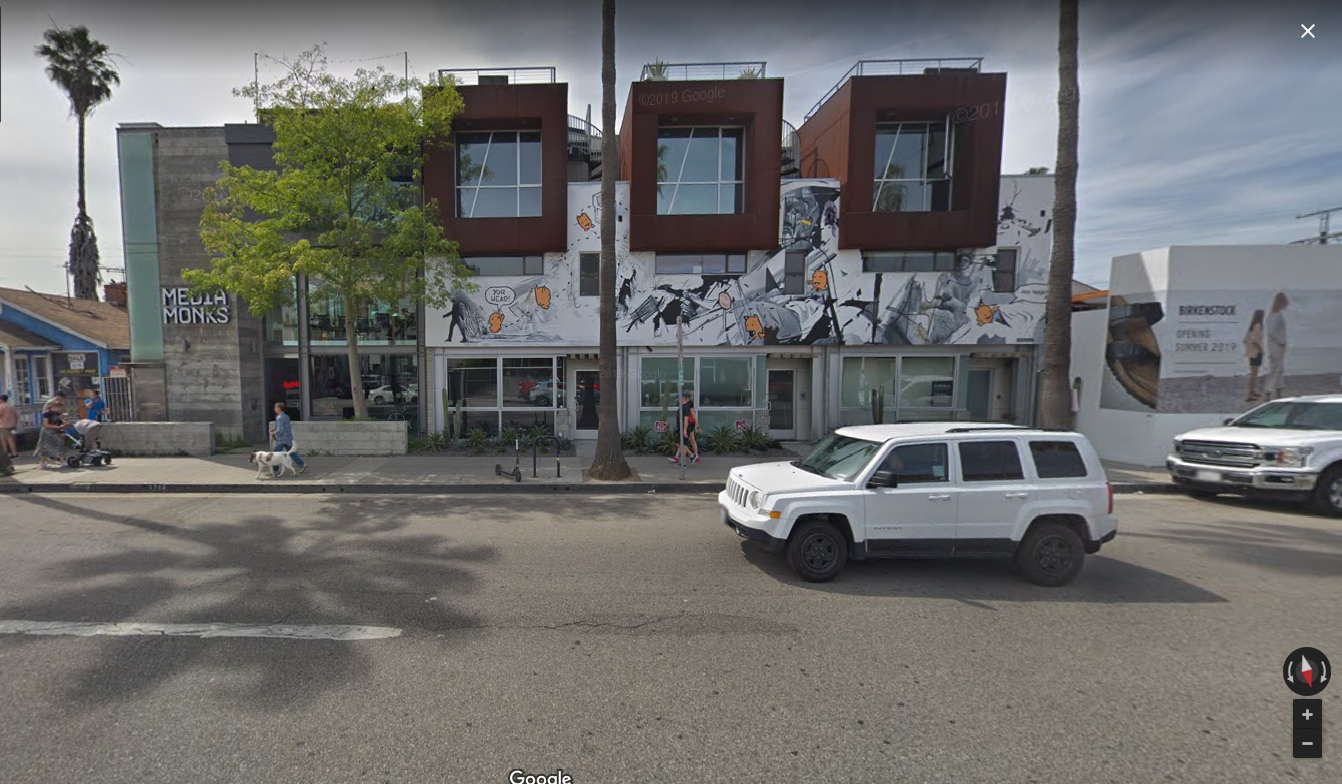
In December of 2011, Alan Chang of Bigfoot Corp, in New York, which is also owned by Gleissner, moved OMP to 1214 Abbot Kinney Blvd. in Venice, California. At the same time Gleb Livshits, of Jerusalem, Israel was also named CEO of OMP and Eugene Mondrus got the boot. 

Second commercial home of OMP in 2011 at 1214 Abbot Kinney Blvd., Venice, California

In March of 2013, Glenissner moved OMP back to Florida where OMP has continued it decline. The new location is 820 Meridian Ave., Suite 100, Miami Beach, Florida.

Third commercial home of OMP in 2013 at, 820 Meridian Ave., Suite 100, Miami Beach, Florida
Forth home of OMP in 2014 at , 1451 Ocean Drive, Suite 200, Miami Beach, Florida. In 2015 OMP was moved to suite 602 in the same building.

Then, in February 2014, Glenissner once again moved OMP to 1451 Ocean Drive, Suite 200, Miami Beach, Florida, 33139. Then in December 2015, after failing to file an annual report, Glenissner reinstated the business and moved to Suite 602 within the same location. That arrangement wasn’t working out so well, so in March of 2016, Glenissner moved the business yet again to his residence in Hollywood, Florida. 

After having enough, in April 2017, Glenissner bought on his business partner, Christian Heinrich Jagodzinski and they once again moved the business to 81 Washington Ave., Suite 300, Miami Beach, Florida, where the business has finally found a stable place of operation and continues to operate from there to present day. In April 2018 they also brought on Prem Balwani as an executive. At the end of June 2018, they finally changed the platform and revamped the website which is worse than the old one due to losing many of the old features.

Fifth home of OMP starting in 2017 at 81 Washington Ave., Suite 300, Miami Beach, Florida

Website Deception

Now, they have followed suit with other modeling sites like Model Mayhem, which retains ranking as the number one modeling site on the web with over 1 million members. The only problem is that is a bit deceptive! When then ban someone, or the member becomes a ghost profile by no longer using the site, they do not delete it and update the site’s database. In this fashion, they can claim truthfully that they have over a million members. But the deception is how many of those members are “active” members? OMP operates the same way and when they revised the website. Prem and his few so-called staffers attempted a bit of trickery to show most of members was last active moments ago, when in reality, most profiles on OMP ghost profiles of 2 to 8 years and longer. If you do a search, you will only see about 40K to 50K members and again most of them are ghost profiles as people have left to use sites like Facebook, Twitter and Instagram for networking as well as image sharing. 

When OMP changed the site format in June 2018 a long went a lot of useful features. Starting with the Search, you will see in the screen capture below taken 06-14-2019 that the search results produced roughly 45,600 potential models. If most of the profiles are ghost profiles that have been inactive from 3 months to 10 years +, your chances of success on OMP are worse than slim to none! Additionally, if you look at the left column you will see all of the model’s stats are in metric. If you’re in the U.S. you now have convert all of these stats to narrow your results of potential models. If you are a model, this will make it harder for you to get discovered. Another lost feature is when you do look at a model’s or photographer’s profile page, it gives just the state (if in the U.S.). If you are a traveling model or photographer, this is going to make it more difficult in planning, booking or scheduling a shoot! Additionally, be super careful as in an attempt to revive OMP, the last login info is wildly inaccurate!

We contacted OMP and basically sent to them (Phem) just what you are reading here. Since then, it appears that they have disabled the last login feature. So BE SUPER CAUTIOUS in doing a paid membership on OMP! Otherwise, you are going to be shelling out hard earned cash to a website with tons of ghost profiles and wonder why you are not getting any responses!

So Who Owns OMP?

So, who is Michael Gleissner? He is a German entrepreneur, film producer, director, screenwriter, and actor. In 1989 Gleissner launched his first e-commerce company, Telebuch (Tele Book) in Regensburg, co-founded with Christian Jagodzinski. In 1996 he served as managing director of the ABC Book Service office in Florida. which he and his partner sold to Amazon.com in 1998, after which Gleissner served two years as vice president of their US Operations. In 2001, Gleissner moved several of his companies to Asia, among them Bigfoot Communications and Cleverlearn Inc. In 2002 he began Bigfoot Entertainment to finance and develop video productions for various Market. He applied for Philippine citizenship in 2006. Gleissner currently claims to be a property developer in Southeast Asia and the United States along with developing entertainment projects under the Bigfoot Group of companies.

Christian Jagodzinski, also a native German entrepreneur became an online pioneer at 21 years of age with the launch of the first e-commerce company. He is the founder of the first German Internet book retailer Telebooks (Telebuch), which he and his partner Michael Gleissner sold to Amazon.com along with its subsidiaries, ABC Book Service GmbH in 1998 for an undisclosed amount. Jagodzinski took on a position with Amazon as a director of European business development before selling his shares of the company, estimated at $55 million. In 2000, Jagodzinski relocated to Miami Beach, where he is a current investor in the luxury real estate and hospitality sector. He is presently the Chairman and CEO of Desdemona Capital, a real estate and private equity investment company, which has a portfolio of companies including Nikki Beach St. Tropez and Appraisal Hub.

He is also the founder and president of Villazzo, a high-end villa rental business concept founded on Jagodzinski’s own idea of an “ultimate vacation”, focused on luxury and privacy. The company offers the services and amenities of a five-star hotel at exclusive villas in St. Tropez, Aspen and Miami Beach.

The Failure Of OMP

You have seen the evidence of why OMP has failed since 2012. You have lot of moves that most never even were likely aware of as long as you have an active server hosting your website, you can basically move as much as you want and where ever as long as you have internet. Sadly, the site did need a face life as it was the same from the time Cramer started to 2018. However, when you lose a ton of features that models and photographers grow accustom to and rely on, that is a bad thing!

What is really shocking and unfortunate is that you have two very successful entrepreneurs who have experience in this area and yet they have tanked with OMP, even with attempting to revive it. In medical terms, OMP flat lined in 2012 with the sale of the original site. It have been on life support ever since and it is highly unlikely that after 7 years it will ever come back to be anything like it used to be.

Lastly, OMP is not alone here. Today (in 2019) more and more photographers and models are using sites Facebook, Twitter, Instagram, YouTube, Patreon, etc. to network and grow their business as well as followings. Do your research and check the links below. You will discover OMP’s YouTube has not had any recent content added. The same hold true for their Twitter page. Google Plus was shut down by Google across the board in April 2019. It should further show just how dead OMP is.

We’ll be looking into other modeling sites like Model Mayhem, which if you didn’t know caught the attention of the U.S. Attorney General and the FBI to investigate them. So look for that article and as always, the ConsumerTog is here to expose the pitfalls, the scams, schemes and provide info to help you succeed!

Links

OMP Website – https://www.onemodelplace.com/
OMP Facebook Page – https://www.facebook.com/OneModelPlaceOfficial/
OMP YouTube Channel – https://www.youtube.com/user/onemodelplace
OMP Twitter Page – https://twitter.com/ompglobal
OMP Pinterest Page – https://www.pinterest.com/onemodelplace
OMP Google+ Page – https://plus.google.com/+onemodelplace?rel=author

Photographer Case Study #763 Part 2

We are are Part 2 for Photographer Case Study #763. If you have read Part 1, you will need to read it in order to get the full story and the gist of this Photographer’s Case Study. So, without further a due, let’s get on to part two, as it keeps getting better!

Photographer Case Study #763 Part 1 Summary

So far we have another Central Ohio photographer who contacted us about shooting our fashions and products. The photog was provide a general overview of the scope of work, a number of our practices, policies and procedures in order to decide if he wished to provide a quote. He did so and the quotes were not completely itemize and left a lot of questions and concerns to be answered. Rather than addressing and answering our questions and concerns, he side-stepped a lot of them which only raises more questions and concerns. In a number of email exchanges, the photog was quickly finding out first hand that he was dealing with a very experience business owner.

A number of facts were twisted such to make it sound as if we as a company have a ton of horrible experiences with hired photogs when that is merely a falsehood. Another fact that was twisted was that we were looking for a partner of investor and that too is again a falsehood. As a business we don’t owe anyone and have no strings attached. Therefore, we can grow within our means and control the direction of the company without any secondary or third parties.

We also reviewed can covered that despite we were clear that any hired photog must agree and sign our contract clearly stating that any images or media created in any form would be the sole and exclusive property of our company. The photog attempted to force his terms on us and sought payment for images he would take of our intellectual property, control the rights, pay him to advertise on his website and “other affiliated” websites that he never to disclose, was not within our target market audience.

Part 2

The email exchanges continue and the photog was asked what Studio was he figuring his prices from. This was never disclosed to this point our throughout the negotiation process. Also he refused to answer what “equipment” was provide or include with the cost of the rental studio. Further, he also refused to disclosed what these “affiliated websites” were. When people do that and especially photogs, that should be a red flag! That is called Deceptive Business Practices and we’ll cover that! But you should be very cautious of any photog or business that fails to address your questions and concerns in an honest and timely fashion!

Photographer’s Third Email Response

Note, he does not mention the name of the other Studio and he also brings in his “attorney” and throws him under the bus!

“Dean 
Hi! Thanks for getting back with me. I completly understand your concerns. Thank you for your valuable insight. 

I believe there is a solution to the 1099 and help reduce my sales quotes. The 1099 I cannot do unfortunately. I have discussed that with my attorney and that would be a liability issue for my company. Although if your looking for a right off on taxes. You can rent the equipment I need and pay for the studio time. That way you are only paying for my time which is factored in at $50.00 hrly as contracted services and a write off as well. If you look carefully at the quotes that is what the retainer was for in the first place. 

I have already shopped R&L Studio which comes to $245.00 for your alotted time of 4hrs your requesting and another studio that has the same if not a better studio for $200.00. Maybe not so many backdrops. All equipment is provided at the studio. If you add my time of $50.00 hourly to the studio time it still comes to $500.00 which is fine because you said we are just doing basic shots nothing creative. Again trying to be cost effective for you it comes to $500.00 if we used R&L Studio, it would be $45.00 cheaper to use the other studio. 

As for control of photos is not a huge concern of mine other than liability as you have stated. I don’t want my name or business associated with something I have not approved. Again only listening to my attorney. I don’t care about bragging rights my work speaks for itself. For the record I don’t do nudes and never will. There are no uses for them in my business model. I would rather have a great experience and recommendation from a client vs a million photos. Business relationships are the true art. 

I truly believe you would have a great experience with me.
 
So let’s do this. Lets waive the the 50% up front payment. You rent the equipment for tax purposes. You keep the images, and you will require payment of my services at the end of the fashion shoot. In addtion I just require copies of the raw images for liability reasons and will include in the contract that I will not post any photos without your direct written permission.

If you like my work. Then we will continue!
Hope we have come to an agreement. Would really like to start doing the shoots and having fun! Let me know? 

Thank you”

Third Photographer Email Analysis

Once again, not only are new questions and concerns coming up, note than he still has not address prior questions. Let’s start with onsite/locations quote for 4 hours, for $375.oo. If we look at this email above, he states “…you are only paying for my time which is factored in at $50.00 hrly…” I’m not sure where this guy went to school but 4 X $50.00 is $200.00 where I went to school! So you see why I asked him to sharpen his pencil? Where is he coming up with the other $175.00 and what is that for, or cover? Likewise, his other quote for shooting in this unnamed studio is $200.00, which I would book and he provided a rate of $500.00. Again, I’m paying the studio rental cost, and based off his 2 statements above that he is figuring an hourly rate of $50.00 an hour for a 4 hour shoot, that is $200.00 Where is he coming up with the other $300.00 and what is that for or covers? Let me be clear, from start to finish he would never answer that question or revise his quotes!

So lets look at the other area photography studios that can be rented. Links have be provided so you can check for yourself. There are a handful of others, but they are more specialized.
True Studios – 4 hrs., $200.oo – We have shot here
Zurie – 4 hrs., $200.00
Bluestone – 4 hrs., pricey! Call for pricing
R&L Digital Photo – 5 hrs., $245.00 – We have shot here
Qwirk – $25 per hour – 4 hrs. $100
Illumination Studio – 5 hrs. $400.00 – We have shot here
Creative Drives – Columbus – pricey but with 4 studios

The 1099 issue. He states “I have discussed that with my attorney and that would be a liability issue for my company” This is complete crap and a lie, which he didn’t realize at first who he is dealing with. Ideally you want to discuss this with a CPA, not an attorney! Here is the other thing I called his bluff on. What he is really saying here is he can’t do it because he is a new business and photographer and he doesn’t want to have to pay taxes. Which he is a registered LLC with the State of Ohio. This means he would have to claim it on his business taxes and not his personal taxes like a sole proprietor would. Further, if his attorney is telling him to do this, well he just threw his attorney under the bus for misconduct! In Ohio, attorneys are given their licenses by the Ohio Supreme Court after successfully passing the bar exam. They are also required to follow the The Ohio Rules of Professional Conduct as an attorney, with Rule 8.4 covers Misconduct. This means he so called attorney could be disciplined, fined, suspended and even be barred in the state from practicing law. He quickly changes his camera settings so to speak in his next response!

The next issue is his statement of ” I just require copies of the raw images for liability reasons…” Okay if you only need copies for liability reasons, why does he need copies of the RAW files? If there is any liability, which anyone reading this can clearly see there wouldn’t be as I do not engage in deceptive business practices, it would be on my company not him. That is not to say a civil suit could not be brought against a hired photog engaging as a sub personally. Regardless, this is just another prime example of what photogs will do to get RAW files they can edit, use for self promotion and get paid for it as well! This is also just what so many models deal with and because most do not know what I photogs take advantage of them and exploit them for self gain, self promotion and profit.

Now let’s cover the Deceptive Business Practices! In Ohio, like most all states, we have what is called a uniform code. The intent is the same, however the language can vary state to state based on their needs. In Ohio we have Ohio Revised Code 1345.03 Unconscionable consumer sales acts or practices, including but not limited to, (A)(B)(2)(5) “Whether the supplier (photographer) required the consumer to enter into a consumer transaction on terms the supplier (photographer) knew were substantially one-sided in favor of the supplier (photographer) ; (6) Whether the supplier (photographer) knowingly made a misleading statement of opinion on which the consumer was likely to rely to the consumer’s detriment;

At this point you have seen the screen shots of the emails as well as the quotes. If you were on a jury and the cased covered all what has been covered so far, would you agree that this photographer was engaging in illegal and deceptive business practices as well as his so-called attorney – and trying to get me to enter into a one-sided contract / business transaction that was substantially in favor of the photographer? I’m sure most would say yes and agree!

This is the whole reason for this blog site! At this point this guy was #763 and that should tell you just how much this sort of thing goes on! What is totally sad is that in the early 2000’s, I took over a failed swimwear company and two photogs just like this one and the other 762 conned, scammed the former owner, a single mother trying to make ends meet to supplement her income to care for herself and her kids. She used her retirement money to start the business and was doing good, until she came across two con-artist photogs like this guy! She used the rest of her retirement funds to try to keep the business afloat and paying those two con-artists (who their attorney was involved too) for not just photography services, but licensing and other usage fees. It was nothing short of racketeering! That is, until they came across me. They story is covered in Photographer Case Study #1. Spoiler Alert – Thankfully, I put a stop to their scam, which affected about 15 other known businesses. She was able to recover 90% of her retirement funds.

Below we are going to see him get mad for calling his bluff and calling him out on everything I pointed out so far.

Photographer Email Response Four

“Dean

Hi! Thank you for following up and also thank you for the compliment. Yes, I agree that I am very personable and professional. As I would expect anyone who is employed, retained or is a client to be. Again this is business and nothing personal. 

I’m so sorry that we were unable to come to an arrangement and terms to do business together. Except for the 1099 which was an oversight or miscommunication on my part. XXXXXX XXXXXXXX Studio LLC still remains compliant with the tax laws and conducts business in a legal, ethical and professional manner. 

As for the terms of doing business with XXXXXX XXXXXXXX Studio LLC this is all laid out in the formal contract along with a formal release of photos in which we never reached. We were merly negotiating terms which I am sadley embarrassed of even entertaining. That should of ended when you openly discussed the list of problems you have had while doing business especially with photographers to date I am not even sure is factual nor do I want to be a part of any slander. 

The terms of my contracts and standards of doing business is pretty cut and dry. The terms which were developed to avoid any business complications and any potential high risk clients. This is very common in my trade as you claim to already had experiences with whether good or bad and whether you agree or disagree with them. 

Even as a young business and photography not being the only line of business that XXXXXX XXXXXXXX Studio LLC offers. We offer the experience and a quality product for our clients. Our goal is not to retain strong long term clients and employees.

To date all of our clients our extremly satisfied. 

So I do wish you all the luck and success in your future ventures. 

Thank you”

Photographer Email #4 Analysis

What you see above is very consistent and typical of a lot of photogs when they are exposed for their clever cons and/or their oversights. Sadly, while this photog finds it very difficult to admit when he is wrong, you will note in the bold italic type where he attempts to make me appear to be the bad guy. There are numerous things to stop here and point out.

  • Did he address the calculation errors of his two quotes? No!
  • Did he address itemizing the difference in both quotes and what that money is to cover? No!
  • Did he address who these affiliated websites are? No!
  • Did he provide his deposit and refund policies as required by law? No!
  • Did he apologize for his snarky / snide remarks? No!
  • Did he address the 1099 Misc. C issue? Yes, an oversight on his part.
  • Do you feel he was lying about having an attorney advise him to break the law? Yes!
  • Did he ever provide his so-called attorney’s name, contact info and his license number? No!
  • Do you feel he was being over bearing and attempting to force his terms and condition on a client rather than agreeing to ours? Yes!
  • Do you feel he has been engaging in Deceptive Business Practices and attempting to get me to enter into a one-side contract / sales transaction that substantially favors him being the supplier (photographer) and prohibited by law? Absolutely!
  • How likely would you be to hire this guy for his photography services having seen all of this? Not likely!
  • Do you feel this guy and other photogs who engage or employ the same tactics is an “artist” or a “con-artist”? Con-artist!
  • Would you now agree at this point that due to Copyright Law, that a ton of photographers use owning the image upon pushing the shutter button making it a “fixed medium” as a way to exploit models and clients?
  • Would you agree that today the majority of people learning photography is done via YouTube and other social media platforms and like this guy, as a new business he has learned a lot of bad things, habits and business practices? Yes!
  • Do you feel this guy was concerned about our needs, concerns and fully answered our questions? Or do you feel he was selfish, self centered and out for himself at the expense of anyone who hires him?

It is truly sad what is going on across the industry. Stop and think about this. You are a wedding bride. You want your day to be perfect and memorable! You find a photog and not knowing all of this and how to protect yourself, you chunk out $6500.00 for wedding photography. As in Photographer Case Study #435, you see crappy images that are taken, removed as “outtakes” only shown what they want you to see, the images are edited their way, you get lessor quality images (“high resolution jpegs”), you get a minimal amount of images – say 75-100 for your album, your images may have their advertising mark on them, you are given a list of terms and conditions where you can post the images, licensing and usage crap, you paid the photog to advertise his/her business, to self promote in photography and social media groups all for a mere $6500.00… and no payment, no photos. Now let me ask you, is that a fair deal or more of a one-sided consumer transaction? I don’t know about you, but I’m a photographer and that is pretty one-sided if you ask me!

Conclusion

I want to stress that this is NOT all photographers. In fact, there are just as many great photogs out there who are not just great at what they do, but they will work you, work to meet your budget(s), not get caught up in the copyrights stuff, not exploit you, or have a list of restrictions as long as your arm. We have worked with tons of them without any problems! In fact, unlike this guy, we don’t do the 1099 Misc. C tax forms, we give them a complete set of RAW images that they can do what ever they want with provided there is not restrictions to either party and they are used in a respectful manner.

If you are a model or a consumer seeking photography services, use this case study to avoid the same issues. Hopefully, you seen how this photographer and tons like him attempt to use deception to con models and clients into one-sided business & consumer transactions. Most are merely amateurs who use copyright law to not how it was intended to be used, but to con people.

Make sure they fully answer your questions. Tell them if you are paying them, then you want to see all of the images, make you pick or selections, have the selected images edited your way, you want high resolution raw files and no watermarks on your final images! If they won’t do or agree to that, then move on. There are plenty of real professionals who will.

Photographer Case Study #763 Part 1

Today’s Photographer Case Study is #763 and it if you are a model, a business, or someone like a wedding bride, it definitely one you will want to completely read!

This photog contacted me back in July of 2017 in a model /photographer Facebook Group. After seeing a few of my posts, he sent me a DM (Direct Message) and inquired about what I do and if I needed photography services. I responded and asked him what he was looking to do. In short, he told me he was in Central Ohio and has shot for other clothing retailers in Columbus. How I operate, I was already looking him up. I also responded back clearly telling him I don’t operate like most and gave him a quick run down of my practices, procedures and policies. Despite that, he stated it was a problem and could work with any company no matter what their practices, procedures and policies are. He was pretty confident, but like the rest, he figured me for an idiot!

The Sales Quotes

In order to give someone, a client or customer a quote, you need to know what the job consists of. So here it is. We do a 4 hour shoot with one or more models, selected by my company. We do not work with our deal with Photographer Model Managers (which there is a good reason why that I will get to later). In the 4 hour shoot, if shot outdoors on location, a backup location will be planned in case of foul weather. Models will model 15-25 outfits in that 4 hour time frame and it depends on how experienced the model is as well as how fast she can make wardrobe changes. The photographer will agree to all company practices, policies and procedures, including but not limited to being a subcontractor of the company, receiving a 1099 for any payments over $600 per IRS tax rules. The photographer agrees that any and all images, video or other media will be the sole property of the company and not the photographer. No exceptions! The photog will be provided new SD cards for their camera(s) and when they become full or at the end of a shot, they will be returned to the company. Any photog attempting to take glamours or unauthorized images of clothing, models, subjects, staff, associates, etc. will face non-payment for breach of contract. Images picks and editing will be done by the company in-house and the photog will receive 5-25 images to use for non-commercial use in their portfolios.

As for the images of the models, the focus will be on the outfits, not the model or the background. The photog will work with the model(s) to get a full body front shot, full body side side, full body back shot and one shot of any embellishments, notions, etc. Images such be limited to rough 4 per view of each outfit.

Pretty simple huh? Now the reason for all of this, which if you’re a model, then you know the scams, schemes, ploys and such that a lot of photogs play which exploits the models. As a brand we have a look we are going for and I’m picky about models. Plus we run them through a screening process to weed out the bad apples. This is why we do not allow or used models who photogs manage. It only benefits the photogs and that is why they like to do it. It makes their pitch sound good to models like “Like have this clothing company I am working with or for and I need select models. It guaranteed work!”

What is funny and ironic is that I recognized him as he and my one older brother work for the same company. My brother quit due to a lot of reasons, but one a lot of the techs we gay men and he got tired of being hit on and hearing about the inter-office gay relationships going on. Now, as for this photographer, when I looked up a few places he had shot for, there were a couple of gay men clothing stores in Columbus. Not a huge deal but what does he know about women’s fashion? His port also consisted of sports cars, muscle cars, pics at the zoo and some landscape. Not looking good for this guy! But he was provide the scope of work and I told him be prepared to sharpen his pencil if I felt he was off.

Along with his quote he sent an email which stated the following…

This was the email that the quotes were attached to and only caused more questions and concerns.

Dean,
Hi, and thank you for the opportunity to work with you. I provided you the studio and on location sales quotes for the fitness/swimwear fashion shoots. These are for 4 hour blocks as you indicated. They do not include model pricing as that will be something that we can discuss based on your budget and approval. As I am already actively recruiting models just waiting on rates. All determined camera equipment will be provided including the studio.There is no limit to outfit changes and or number of models per fashion shoot. I will leave that to your preference.
For scheduling purposes we will have to schedule out studio shoots based on availability of studio times. I can coordinate this with the models and yourself.
I do require 50% down on all shoots and the remaining balance to be paid in full upon delivery of finished product. A contract and release will be required prior to any services rendered.
As for the video quote. I will still need some more information to provide you with a more accurate and cost effective quote. I would have to see the locations, which if you provide addresses I can view these. I want to make sure we have the right equipment for the job.
Look forward to working with you.
XXXXXXXX

Analysis Of Quotes

I made the things that were a concerns and questioned in bold italic type. 1. He provided two quotes, one was for on location sites $375 and the other for in studio for $500. Not a bad deal huh? That is pretty cheap right? Wrong! Jump down to the second bold italic type and we quickly discover that he too has no studio and therefore has to rent one. Not a big deal. But what studio? I know of about every one in central Ohio along with there pricing. Most range from $40 to $60 an hour, so let’s call it $250. Here’s the problem with this. I don’t have a problem, but if a studio is rented it will be through my company, not the photographer. There are many reasons for this. Most of the studios have and are willing to rent gear and lighting. Some come with the rental cost. I have my own so why pay additional costs for equipment I already have? Here is the other problem with this quote and we need to look at the law,

Ohio Administrative Code 109:4-3-05 (D)(12) Repairs or Services “Fail to provide the consumer with a written itemized list of repairs performed or services rendered, including a list of parts or materials and a statement of whether they are used, remanufactured, or rebuilt, if not new, and the cost thereof to the consumer, the amount charged for labor, and the identity of the individual performing the repair or service;”

Reread his above email and ask yourself did he comply with this division of law? If you said no, then you’re correct. He never stated what studio he was renting, what equipment he had, what equipment is provided by the studio and again, as a business, I’m not paying for equipment I have they hes doesn’t and him want to charge me.

The next thing is his demand for a a 50% down deposit. When photogs and models do this, it is a red flag that they got burnt in the past by someone But aside from that, to collect deposits in Ohio, you must comply with,

Ohio Administrative Code 109:4-3-07 Deposits. “It shall be a deceptive act or practice in connection with a consumer transaction for a supplier to accept a deposit unless the following conditions are met: A through E of this section. ” In short you need to provide the client or customer what your deposit and refund policies are. Like how long does the customer have to get a refund? What are the conditions of a refund? There are 7 subsection of law that must be meet to again collect deposits which he as not provided!

The Reply To Quotes

“I have quickly reviewed your email and the quotes and have some comments as well as questions. 

First and foremost, I have an issue with the 50% down and the rest upon delivery of the finished product. Working for me, you would be a subcontractor and/or an extension of Devious Designs & Amped Fitness. Therefore, I am old school and will not or do not do pre-pay but rather rather payment in full for services rendered. Along with your contract and agreement, you will be required to agree to and sign our agreement and release. In short, you agree to follow our polices and procedures. A number of items we discussed during our chat including, but not limited, model selection, model posing for clothing shoots, editing, location(s) shoot length etc. This also include prohibitions such as insuring camera equipment with double memory cards are not both used and when cards become full or when the shot is completed, those memory cards become the property of Devious Designs & Amped Fitness. Upon review of the images, as discussed in our prior conversation, if unusable images are discovered, the use of dual memory cards, etc. there will be no payment! This ensures any hired photographer is staying focused and obtaining the shots we want and need. Additionally, this ensures Devious Designs & Amped Fitness picks the best images and if required, editing will be done to our requirements, which as discussed should be minimal. If need be we’ll edit the selected images in-house. As I’m sure you know, most photographers tend to want to review all the photos from a shoot, make “their” best picks, and edit them to “their” tastes or liking. As discussed, I do not permit that, unless it is mutually agreed and the photographer has proven they can achieve our standards and follow our photography policies for this type of work offered.  

Per your quote and use of the studio you mentioned in our conversation, can you please provide the location of your studio. I will need to see the studio prior to use.  

To reiterate, we typically do clothing shoots of 4 hours. Within that time frame we can typically shoot 15 to 25 outfits, which the main factor of this is comfort levels and time the model takes to make wardrobe changes. However, shoots may be conducted for new or custom designs that allow us to see how the outfit will look, fit and cover the model. Also these are often used to show customers for approval and are not permitted to be shown in any public setting or manner. With that being said, typically we still schedule 4 hours but may be only a few outfits. Locations will be selected by Devious Designs & Amped Fitness as well models, which they are booked based on availability as well as what is needing photography wise and the model’s sizing. Therefore, we are providing all the outfits, models book through us as well as any hired photographer, makeup artist, stylist, videographer, other professional, etc. Hired photographers like yourself are hired, used and compensated for your time, equipment and editing, if so needed. This is one way we check quality and standard from having a memory card straight out of you camera. We can compare the RAW image to any one that has been edited.  Further, due to intellectual property with designs and other segments of our business, Devious Designs & Amped Fitness will be the sole owner to the images as well as rights so that we can retain what is put out to the public and when. No exceptions! ”

There was a bit more but you get the gist of my response to this photog.

Photog’s Follow Up Reply

Pay careful attention to what he states in his follow response. This is where photogs like him get sneaky, crafty and like to twist the facts.

This is his second email and below the parts that cause more questions and concerns have been put into bold italic type.

“Dean,
Thank you for getting back with me and listing your concerns and requests. It’s unfortunate that you had such horrible experiences with prior photographers. Like you we are all in the interest of doing business in a professional atmosphere. Like you I have learned the business too. You are not the first clothing designer/supplier that I have worked with. So the way I do business is set up for the interests of both the client and my business. I have a 50% payment policy so the client can secure thier time. The other 50% is paid upon final product that we agree on. This secures that the client achieves good usuable product. 

Regarding for your 1099 request. Thank you for your consideration. Im sorry I am not looking for a partnership nor investor. For liablility reasons that would not be a realistic offer. XXXXXX XXXXXXXX Studio LLC is not soley a photography company and designed to assist clients with thier full marketing purposes, ranging from graphic design, photography and videography.

As for the control of product. I never hand over raw images or product of anykind for this is intellectual property created by XXXXXX XXXXXXXX Studio LLC. I have no problem handing over copies of the product onsight to meet your requests due to quality control, but this must be written in our contract stating that XXXXXX XXXXXXXX Studio LLC is not liable for any recreated product. In addition all photos will be for commercial marketing purposes only and not intended for resale. If you are intending to sell images of the final product that would be different pricing standard. 

I would hope you would agree to this, for as you would never allow someone to take your product and use it with out them paying for it nor would you allow them to take your product alter or reproduce it with your name attached to it. So like you I have measurements in place to protect the interest of my company.

As for the display of product for business marketing purposes. Like all of our clients we professiinally review together selected items to sure quality and not to premature release of any prototype products. This is a mutually beneficial purpose for your product will be advertised on XXXXXX XXXXXXXX Studio LLC and affiliated websites. This expanding your market base and hopefully customers.

To reinterate our discussion about models. I have no problem with you providing the models as long as they can provide you with the necessary poses and looks needed for you. I actually prefer it that way. I just would also require it to be stated in the contract that we are not liable for no shows, the models performance and or location choices. 

To comment on my rates. I am in business to make money like you. I have provided you wiith a really fair offer. As it states in each sales quote description the Studio is $500 and On location is $375.00 local locations only. Travel would require a different rates. 
I would have to visit the video locations to make sure i have the right equipment. Especially for the small kitchen area.

It sounds like you need consistant quality product from a trusted company at a fair price. That’s what I am offering you with the bonus of good business relations. I like long term clients. 

This is business and still interested. I would love to work with and build a long term relationship. 

Thank you
XXXXXXX XXXXX ”

Second Email Analysis

Once again, you should have taken note of the bold italic sentences I highlighted and read between the lines. Note in the first bold line he is trying to make it sound like I have had a ton of horrible experiences with photogs and model. Not at all. One two who were a partnership when I took over the failed business and they attempted to do exactly what this guy is trying to do. Because they broke the law, a few government agencies got involved and there two are no longer photogs. Since then, I have the polices in place that you have read to prevent guys like these clowns from exploiting my business.

Note the second line that he is self-centered and states he has his business set up for both the client and him, not the client. Without a client of customer, you have no business, plain and simple! This shows he has little concern about what a client wants and needs.

The next is hilarious with him trying to do a bait and switch like I am seeking investors or a partnership? Review what I wrote and did I say I was looking for an investor or partner? Absolutely not! A lot of photogs are notorious for this kind of stunt and will take and twist things around to play victim and attempt to make you look bad. Nice try for him but it didn’t work! The reason I set guys (photogs) like him up as a subcontractor, is so I can document the expense and write it off on taxes. He could do the same, but anything over $600, they have to pay taxes on. It just keeps the con-artists honest!

The next is where I want you to really pay attention and where he stated he never hands over raw images or products of any kind that is the intellectual property of his studio? He wouldn’t even make it that far because we do not hire any photog(s) that do not agree that any and all images created for Devious Designs & Amped Fitness is upon creation the sole owner. Stop and think about this. Let’s say Ford Motor company is designing a new truck. Are they going to pay you as a photog to come in and take image that they have no control of or over and don’t want released to the public yet.Absolutely not! You see this all the time with models who shoot with photogs and then the photog comes back and says he took the image and therefore he owns the images and can do whatever.

Pay attention, in his next paragraph, after wanting people to pay him and have not control over their images he tells on himself to state… “This is a mutually beneficial purpose for your product will be advertised on XXXXXX XXXXXXXX Studio LLC and affiliated websites. This expanding your market base and hopefully customers.” You have to be very careful with this as if you read my articles on marketing, target marketing, etc, what this guy and tons of other photogs are attempting to do is to have you not just pay them for taking images, but to control the images and market them where you may not want them posted! This is all done via copyrights and they own the image when they push the shutter button, unless you have something in writing stating otherwise.

Sadly most photographers are not marketing to the right audiences or their tailored target market. Instead they love to play what I call “Show & Tell” for self promotion to say “Look at me, look at me, look what I can do!” in photography groups which is generally closed groups of other photographers. But I hope you all notices that he states “affiliated websites” but does provide any names, links, etc. This means he wants to play Show & Tell on Facebook, Twitter, Instagram, etc.

I’m sure over time I will get a lot of negative comments from the sophisticated photogs about this. However, here is the reality. We have our target market down to pretty much a science and this guys and all others do not know exactly who are target market is. That is our intellectual property. He really can’t market on sites like eBay or Amazon as he doesn’t have the outfits. Secondly, if he or anyone other hired photog over edits or processed the images, then we get a major influx of returns from customers saying what they got is not what they ordered. He and other photogs do not have to deal with that aspect! Third, when photogs like this guy plays Show & Tell, all it does is created a vicious circle of other photogs wanting free outfits, loaner outfits, or they inquire about shooting our fashion. We don’t make any sale from this no matter what any photog may say!

I will end here and see Photographer Case Study #763 Part 2 for more of the story.

Photographer Case Study #435

Back in 2011, I was contacted by a central Ohio photographer who was seeking to offer me his photography services. He had a Model Mayhem portfolio and One Model Place portfolio, so I checked them out. An instant turn off was the fact that more than 75% of his images were nudes. In the photography industry, they call this “artistic nudes” yet there was nothing artistic about it. Simple put, his portfolio was simply a bunch of nude females, nothing artistic about it!

I responded that with a polite thanks, but no thanks as I shoot in-house. However, I do offer opportunities to very select photographers to give them a chance to shoot something new, or gain experience in what we do… fashion. Unfortunately, I did feel that he met my requirements. That was a mistake on my part.

Over the next 6 months, the guy hounded me with emails and message on a few modeling websites. Each time, I checked his port and there was an increasing number of nude models. I was not impressed! Plus I didn’t want reference to what he was involved in or shooting with my company.

Photographer Requirements & Why Most Are Turned Down

Each year, we as a company get about 100 to 150 inquiries from photographers. That can be a good thing depending on how you look at it. The first thing I do, is I look them up to see if they are a registered business entity. If they have a Fictitious or Trade Name filing with the State, or a Limited Liability Corporation (LLC) or Corporation filing. If not they can typically be a Sole Proprietor, yet even then, they need to have a filing registered with generally the local Clerk of Courts County Recorder (this can vary state to state, county to county. I couldn’t find any filing on the guy at the time.

Next, regarding a photographer’s work (not art) we look to see what they are shooting genre wise. We mainly do fashion, lifestyle (health & fitness) and products in what the industry likes to call catalog, print, commercial, glamour, and fashion. What I’m looking for is a mix of stuff along the lines of fashion, health & fitness and product related to that. Let’s say you have 100 images posted as a public portfolio and 75% or more of them are artistic nudes, nudes, nude fetish or erotic in nature. That means that is what you shoot most of the time. They can be the greatest images in the world, but how do you go about convincing a swimwear company that you can shoot and deliver just what they need? While I am open to those genres, that is not what my company is about and not what we was associated to or with for obvious reasons. Nude models do not sell clothes!

Next while most are looking to see if the images in tack sharp, the lighting perfect, etc, I’m looking to see how many of their images are watermarked, or what I call advertising marked. Again, I take the total number of images posted and if 75% or more are watermarked, we pass and move on. Why? Exceptional and professional photographers know watermarks ruin images and are a major distraction. Many photogs even make a far greater mistake to put their advertising mark big and bold across their images or the subject. Let me ask you a question. If you do this, what does this say about you and your work? It tells me you are an amateur, self-centered and you care more about you than providing quality services and products, not to mention you lack business savvy!

This brings me to… out of those same amount of images, does the photog credit or name the model or subject? If the photog’s images do not credit the model or subject in 75% or more of his/her images, they are turned down. Why? A good majority of the time, photogs seek to get out of paying models via using TF (trade for time, trade for prints) shoots. They photogs quickly learn is many groups that they are photography Gods and they want credited if someone else uses their images via usage rights, licensing rights, stealing the images, or even buying the images and rights outright. So, what does this say about you if you cannot credit others who helped make the images, especially if it is done for free?

I have my company and brand. If I am paying you for your services, I want you promoting my company and brand, not yours! Just because you pushed a shutter button and when to do that and the image becomes a fixed format or medium, you instantly own the image(s) under U.S. copyright laws. That is a sneaky and deceptive way to gain images. Secondly, most photogs lack business savvy and love to play show and tell in photographer and model groups. I don’t want you associating my business with your, especially if you mainly shoot nudes of any kind.

Bombed Requirements

This Central Ohio photographer bombed meeting my requirements. 75% of his images were okay nudes and nothing I would brag about as a photographer. Most of his images were advertising marked and most did not credit the models. There was about 25% of his images that were landscape and in my view, they were pretty darn good!

I didn’t point all this out to him but I did ask if he shot fashion. He replied yes. It was obvious he didn’t as fashion is clothing, not nudes. I got tired of him hounding me and I decided to meet him for brunch at a nearby place that was close for both of us. Here is where I also see a ton of photogs screw up and just what this guy done.

It didn’t take him long, maybe 5-10 minutes to do what tons of photogs do, start talking psychobabble, F-stops (aperture), shutter speeds and ISO as if trying to impress me. Further he went on to boast that he was the CEO of some Canadian based electronic monitoring system that I think they use in the automotive assembly line process. Plus he was the CEO of some other company that dealt with monitoring equipment primarily in low to medium volume production environments such as in screen printers, reflow ovens and certain other peripherals such as component feeders, matrix tray handlers, material handling conveyors and machine vision systems. Okay, but what can you do for me? He wasn’t done there! He was also Vice President of some company out in California that deals with medical scanning equipment like Cat-Scans.

It was all about him and his unimpressive management roles. If he was CEO of two medium sized companies described above and V.P. of other, plus a principle in another and President of some manufacturing association, what was he doing hounding me to play photographer and shoot my fashions? Secondly, if he was an executive of all of these companies, did he get there when he can’t even ask what we do, what we need and provide solutions? Next he got on the camera gear tech talk. Great! Now I had to hear about his Canon 5D Mark II and how he was going to upgrade to the Mark III. I didn’t want to be rude, but I just wanted to get up and walk out. Let me ask you again, how do you get to be a CEO of 2 companies, President of 2 others, a Vice President of another and you cannot even convince a small business owner to work with you?

Persistant Photographer Turns Annoying

This is what I require all models to submit before booking with them. I had this model, Shelby take these plain Jane shots as an example of to give to this photog to show him what I want. Pretty difficult huh?

All summer the guy hounded me on social media and a number of modeling websites. Finally it was in late October and I figured I would give the guy a chance and do a test shoot. We had a number of email exchanges and I clearly spelled it out to him my requirement, which were and still are simple!

I need at minimum, 4 usable images of every outfit. 1 full body front shot, 1 full body side shot, 1 full body back shot and 1 shot of any embellishments or notions. The next part is where most photogs also fail. Fashion is not about bokeh and background blown out, or the model (though she needs to look good) or glamour shots! Most professional camera bodies have 2 memory card slots and we check to make sure both are empty. We then provide the photog memory card and when they become full or at the end of a shoot, we get the cards back. Plus, the photogs sign a release and contract stating we own all of the images, all rights, etc. He agreed to the terms and to do a test shoot. I also sent him some images for reference of what I was looking for and expected.

The agreement was he would cover his time and the rental cost of the studio where he normally shot at. I would cover my time, the model’s time and provide the outfits, makeup, etc. Now there was a further concern due to the studio he would shoot at. Back then they allowed photogs like this guy to rent the studio 24 hrs a day with minimum blocks of time, like an hour. However, a number of them got shooting nudes and running a sex ring out of the studio. You put 2 and 2 together with what he was normally shooting and what was going on there. Today, they have security cameras all over, no nude work is permitted and there is no longer shooting all hours of the day or night.

I found a newer model out of Cleveland, Ohio and she fit the bill of what I was looking for and the type of model I normally use. I set it up with her and on the planned date, she drove down and was right on time. I did forewarn her about his portfolio and to be on guard, but he has already rubbed me the wrong way and likely would not get any of my work. But, I also wanted her thought of working with him.

The Photographer Test Shoot

Checking and adjusting the model’s suit. Note how I am standing behind her to not make her feel uncomfortable.

I have shot at this studio before myself, so I knew the setup and layoff. The photog had gotten there before the model and I and was set up. The model and I went over the paperwork and the shoot. I gave her the first swim suit and showed her where the bathroom was. Just to piss other photogs off when she came out I checked her suit as I’m anal about the suit looking good. I want to make sure ties are straight, not twisted, tri-tops are even, not wrinkled, one breast higher than the other, etc. I made adjustment and we were read to begin.

The goal was for him to instruct her on posing to get the shots we needed, to make her feel comfortable and relaxed. After each pose, I would say “Hold on…” step up and take a shot with my cellphone camera, then proceed.

Here is where he further bombed and perv-tography (as I have coined it) comes into play. As state, for each pose I would make sure her suits were good. I would then walk over to where I had the suits and get the next outfit ready. Every time I looked up, this guy was over next to the model messing with her hair, trying to readjust her suits. That pissed me off! We had a little chat while she was changing into her next suit. I made it abundantly clear, that once I had the suit and her looking the way “I” wanted it to look, not to mess with it. I also checked his memory card slots.

I then went outside to grab some stuff I purposely left in the vehicle and to give them some time along where I wasn’t over his shoulder. When I came back in about 10-15 minutes later, there he was up adjusting her top again. So from there, I didn’t let him out of my sight with her. Again, when I would look up, he had her in some goofy pose like this!

Is this short going to sell the one piece black swimsuit? If you are a female reading this, would you buy that suit based off of this shot or image?

Bear in mind this was not a model test shoot. It was a photographer test shoot! All of the images in this article are unedited so you can see just what this photog did and shot straight out of the camera.

Let me stop here. In the farming and construction industries, equipment dealers will allow you to demo or try out equipment. In the legal field, many attorneys do a free consultation. In the real estate field, we go check out homes before we buy. The same holds true for the auto industry. We test drive a vehicle, check under the hood, kick the tires before we buy. Don’t be afraid to do the same with photographers! Even if you have to pay them a few bucks, have them come take some shots of a friend who is pretending to be bride before your wedding. Look at the unedited images. If they won’t allow this, then kick them to the curb and move on to the next! A well experienced and professional photog will do this Don’t just go off of photos they edited and put on their websites!

What kind of pose it this?

I cannot stress enough that every time I turned around, this guy had the model in some goofy pose like this one to the right! He claimed he had 10 years experience and was a great fashion photographer.

This is exactly why a ton of photogs do not let anyone see any unedited images. I’m not sure if he would consider this an outtake or not. But this flat out sucks! Now if you are a wedding bride looking to get married and looking for a wedding photogs, you do not want to be paying a photog any amount for crap like this! Normally they will remove this shots as this makes them look bad! So even on your wedding day with all that is going on, either you go up to or have you to-be spouse go do a run through of the images your photog took up to that point! You should not be seeing shots like this! Make sure you have it in your contract (which you can pen in) that if you see shots like this, there is a liquid damages penalty, or reduction in fees. Remember, YOU ARE THE BOSS, not your photog! Also demand unwatermarked final images!

I won’t embarrass the model as she was awesome, but in this shot the photog was standing in the studio area. The bathroom changing room is as you see in the photo, off to the left side of the studio area. After a couple hour test shoot, I witnessed all I need to see. I told the model that I wanted to update and check a few measurements when we were done. Her and I went into the bathroom/changing area, and while he had absolutely no reason to be in there, here he came with camera in hand. I also asked him for the memory card and he was attempting to put another card in the empty slot and copy the images or pull something sneaky! I didn’t see these shots until afterwards when I got back to my shop and studio, where I began going through the images! There were shots of her changing outfits. I was totally pissed to put it lightly!

Note the location of the photog and the dressing room off to the left of the infinity background. From his position, he was taking images of this model changing when she did not shut the door.

If that was not bad enough and making her very uncomfortable, he asked her if he could get some shots of her after I left. You could tell by the look on her face, that she was scared. I gathered up all of the suits she models and I brought. Here is the thing. I told her days before coming down to wear something comfortable and not tight clothes like bras or underwear as it can make mark in the skin and take up to 2 hours to disappear. When she arrived, she did just as she was told and came in just some fitness sweats and a zip up sweat shirt… nothing else. If I were to leave, that is all she had on to shoot with him in and he was trying to get her to do some artistic nude shots. So I told her I would like to talk to her before leaving and would wait over in the corner. She was very relieved I didn’t leave her alone!

The model ended up telling him she had a tight schedule and needed to go. He finally got the hint it was not going to happen and he left. Outside I spent about half hour talking to her and discussing the goofy poses as well as him making pervish adjustments after I had her and the suits looking good. Plus she discussed how he made her feel uncomfortable, not to mention him coming into the bathroom while her and I were taking measurement and she had nothing on.

The Conclusion

After going through the photos and witnessing the photos I saw of her half dressed, I emailed her and sent the photos to her. I was not as shocked as she was, but pissed nevertheless! I then got an email from this old perv about owing him $250 for the studio rental and his time. Nice try on the bait and switch! I responded back in a frank manner and with a screen shot of his prior email agreeing for him to cover the studio cost and his time. Of course he fired back with he was the photog and under Copyright Law, he owned the images despite any contract or lease I had him sign stating otherwise. I fired back with the some of the crappy images I included in this article and they shots he was taking of her changing without her knowing.

It didn’t take him long to realize he wasn’t dealing with an ignorant fool. But how he could be tied or linked to the sex ring scandal of the studio, as well as breach of contract if he was able to copy any of the images and post any publicly without the model and my consent. Plus the fact of him taking photos of her in the dressing room changing without her knowing. I told him that I had already contacted her via phone and email to share the images and images. If she wished to press charges, I would be more than happy to testify on her behalf and provide the images, emails and other evidence for her case.

I cannot stress enough that if you are a new model, take an escort with you! It is best not to take a spouse or boyfriend, but take a friend with you! If you hear photogs make claims that you will not make it as a model, tell them to get screwed! Or if they tell you that you don’t take someone with you to a regular job, that is right! You are not doing a doing half or fully naked and no one else around!

Needless to say this guy didn’t get any work from me! But after the sex ring studio scandal and this test shoot, he did go and clean up his portfolios. He removed most of the nude images from them and changed what he showed publicly!

This is exactly why a lot of fellow photogs hate me. I exposed their schemes and I get threatened all of the time with libel and slander threats. Yet none have followed through to have a date in court with me. Pretty obvious as to why!

Make sure you follow, check back and look for other Photographer Case Studies as well as other article to protect yourself from the shady photographers. But also if you are a photographer, what to avoid and check out our articles to help you succeed!

The Journey Begins

Thanks for joi

Thanks for joining me! After 16 years doing fashion design and fashion photography, I have witnessed all sorts of scams, schemes, tricks used in the photography industry. One major thing that is evident that lends to a lot of this stuff is so many models and photographers lack business savvy. 

Unfortunately, many these days take to the internet to learn photography and there is a ton of bad advice out there. These photographers take to photographer groups and share what they know and new photographers take this miss information as gospel. It’s a vicious circle, then add models or paying clients into the mix and you get a wild array of problems. 

The goal here is to expose those bad apples in the industry and provide sound advice to models, the public who seek photography services and those who are just wishing to start a business. The photography industry makes for a great example to cover a host of business / consumer problems and solutions.

So without further a due, let’s get started! 

“If people like you, they will listen to you, but if they Trust you, they’ll do business with you.” ~ Zig Ziglar